
Bespoke, BrandCraft
Client
Boardwave
Services
Date
2025-2026
Result
Boardwave & BrandCraft Elevate: From network to acceleration engine: how Boardwave claimed the category position no one in European AI and tech was occupying.
Europe has a scaling problem, not a starting problem. Governments, accelerators, and communities have poured resources into helping founders get going. Once a company passes €10m in revenue and needs to reach €100m+, the support disappears. The ecosystem fragments by country, by language, by investor preference. Founders end up isolated at the exact moment they need peers most.
The founder networks that do exist in this space operate on one of two models: events-first (pay to attend, collect a badge, hope for a conversation) or content-first (consume insights, never act on them). Neither model creates the sustained, stage-matched relationships that actually move companies forward. Boardwave had been filling this gap for years with a partner-funded, free-to-join community of 2,000+ AI and tech leaders across 15 countries. But externally, it looked like just another network.
The stakes went beyond brand perception. Boardwave needed to attract more venture-backed founders scaling to and through €100m+, deepen partner confidence, and expand across Europe. All of that depended on people understanding what Boardwave actually was, not what it appeared to be.
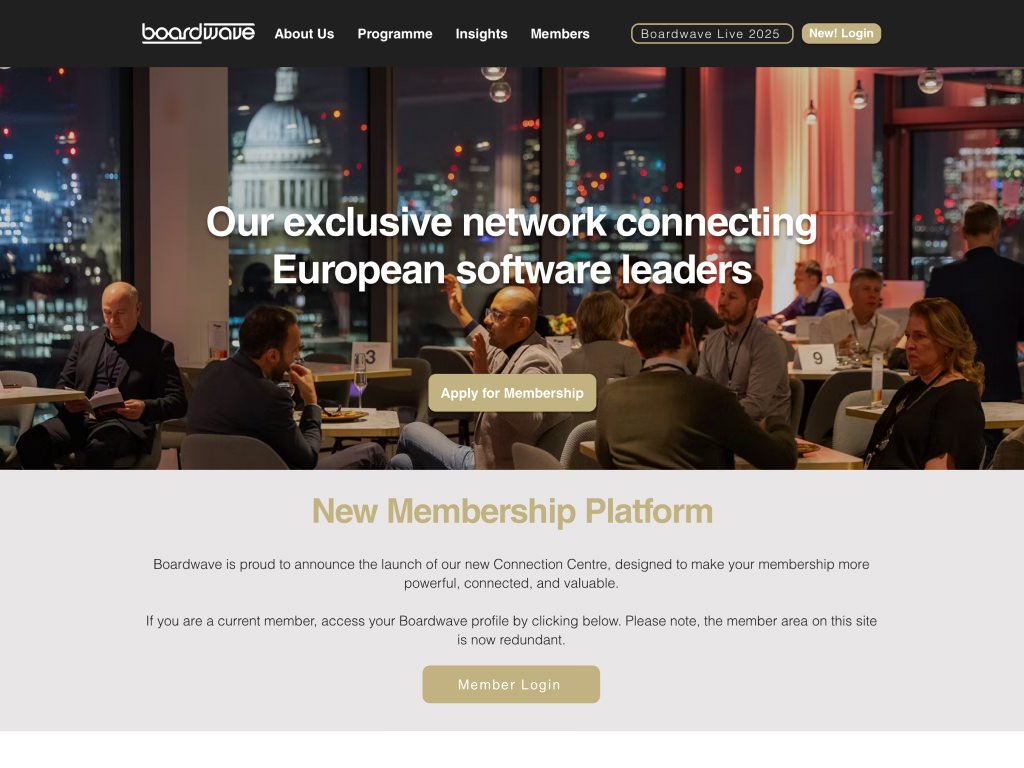
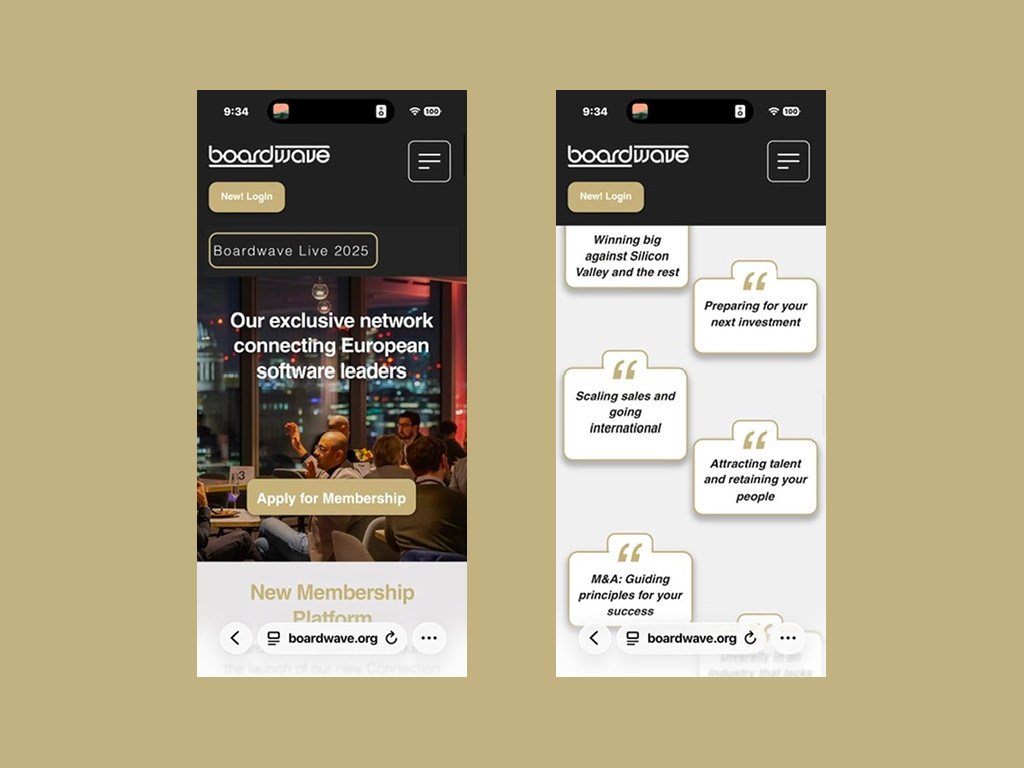
The brief started as a brand refresh. It became a repositioning.
Early in the BrandCore sessions, a pattern emerged: the Boardwave team could describe what they did in extraordinary detail, but each person described it differently. The mission, vision, and values had been developed internally with real care, but they were inward-facing. They explained the organisation to itself rather than to the market.
“We’re a small team with strong opinions, and we don’t always agree on the first pass. What impressed me was how the process gave everyone a voice without letting things drift. By the end of the BrandCore sessions, we were all saying the same thing for the first time. Not because anyone compromised, but because we’d actually worked through the decisions properly. That alignment is still holding.”
The critical shift was reframing Boardwave from a community that connects people to the catalyst that accelerates European AI and tech companies through the scaling phase the wider ecosystem ignores. This was not a copywriting exercise. It required the team to decide who they were really for (founders scaling to and through €100m+), what they stood against (the pay-to-play, events-first model that treats founders as audiences rather than partners), and what they would refuse to become (exclusive, corporate, or transactional).
One decision nearly derailed the process. Early drafts positioned Boardwave as “exclusive.” The team’s reaction was immediate and visceral. Kath Easthope, Director of European Programme, described it as an allergic reaction. The word contradicted the ego-free, generous culture that makes Boardwave work. It was replaced by “independent” and “premium without a price tag,” which sharpened the positioning rather than softening it.
A second language decision shaped the entire project. The team had historically described itself as a “software” community. During the BrandCore sessions, Jess Malkin flagged it directly: the word was ageing Boardwave. The shift to “AI and tech” reflected where the community was heading, not where it had been. Amy Wilson-Wyles framed the question that settled it: what will age well for us? The answer was technology leaders with AI woven into the programme and content, not a hyphenated list of sectors that would date within twelve months.
The team also debated whether to lead with “free membership” as a differentiator. Jess raised the concern directly: does mentioning free undervalue the premium positioning? The resolution was to frame the business model as evidence of independence rather than as a sales hook. Boardwave is free because it is partner-funded, not because it is low-value.
By the end of the BrandCore sessions, we were all saying the same thing for the first time. Not because anyone compromised, but because we’d actually worked through the decisions properly.

Kath Easthope
CEO, Boardwave
The project delivered a complete BrandCore: the strategic foundation covering purpose, mission, vision, values, brand behaviour, brand character, tone of voice, audience definition, positioning, brand promise, messaging framework, and competitive landscape. This was followed by a full visual identity, messaging playbook, and a complete website build.
“Fresh eyes on the brand to bring clarity, an informed, professional opinion. The sessions were structured, clear and the process was seamless. Every deliverable, from the BrandCore through to the guidelines and messaging playbook, was thorough and considered. Nothing felt rushed or generic. It was clear that every design decision and every piece of copy had been thought through against what we’d agreed in the strategy.”
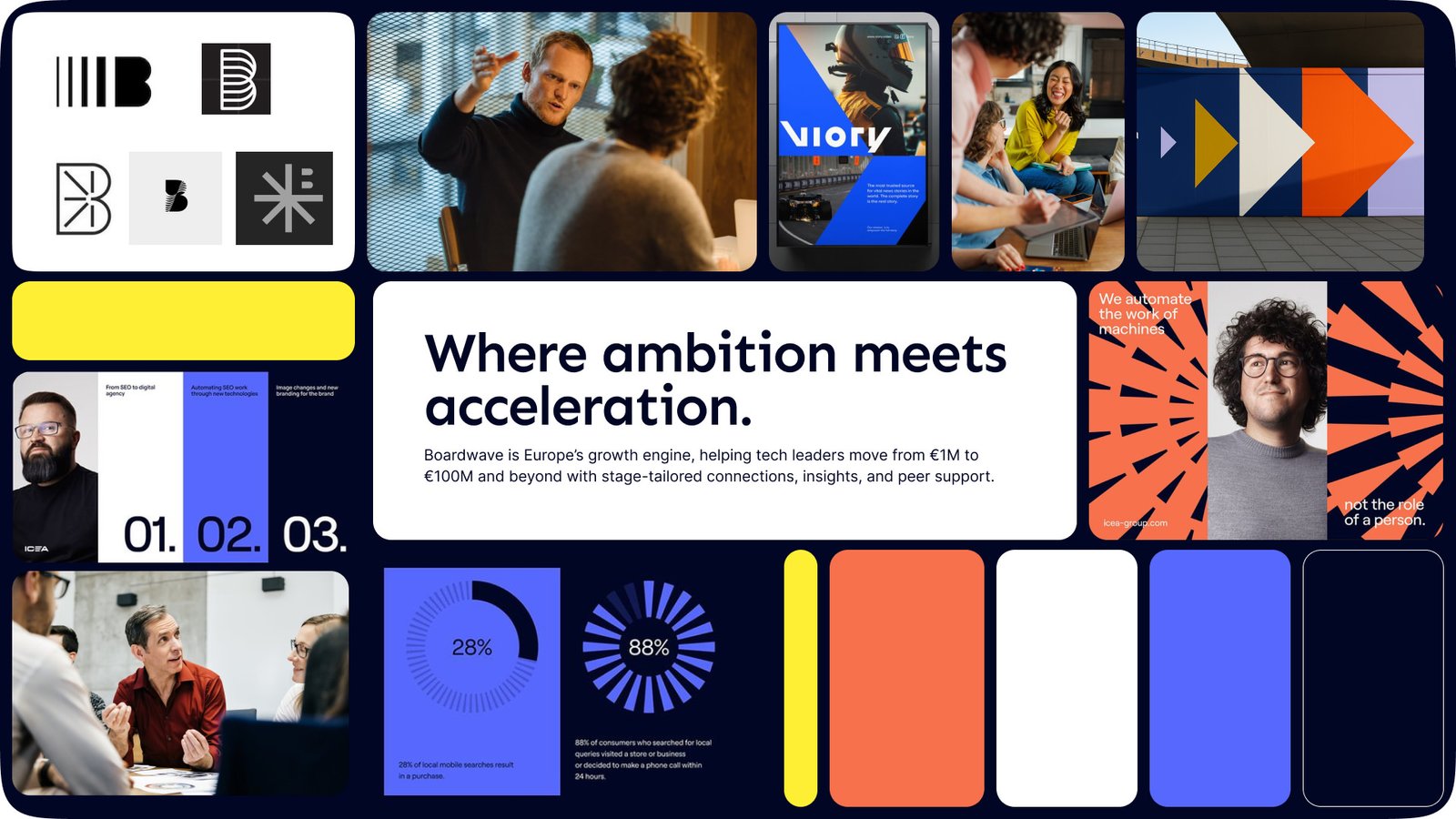
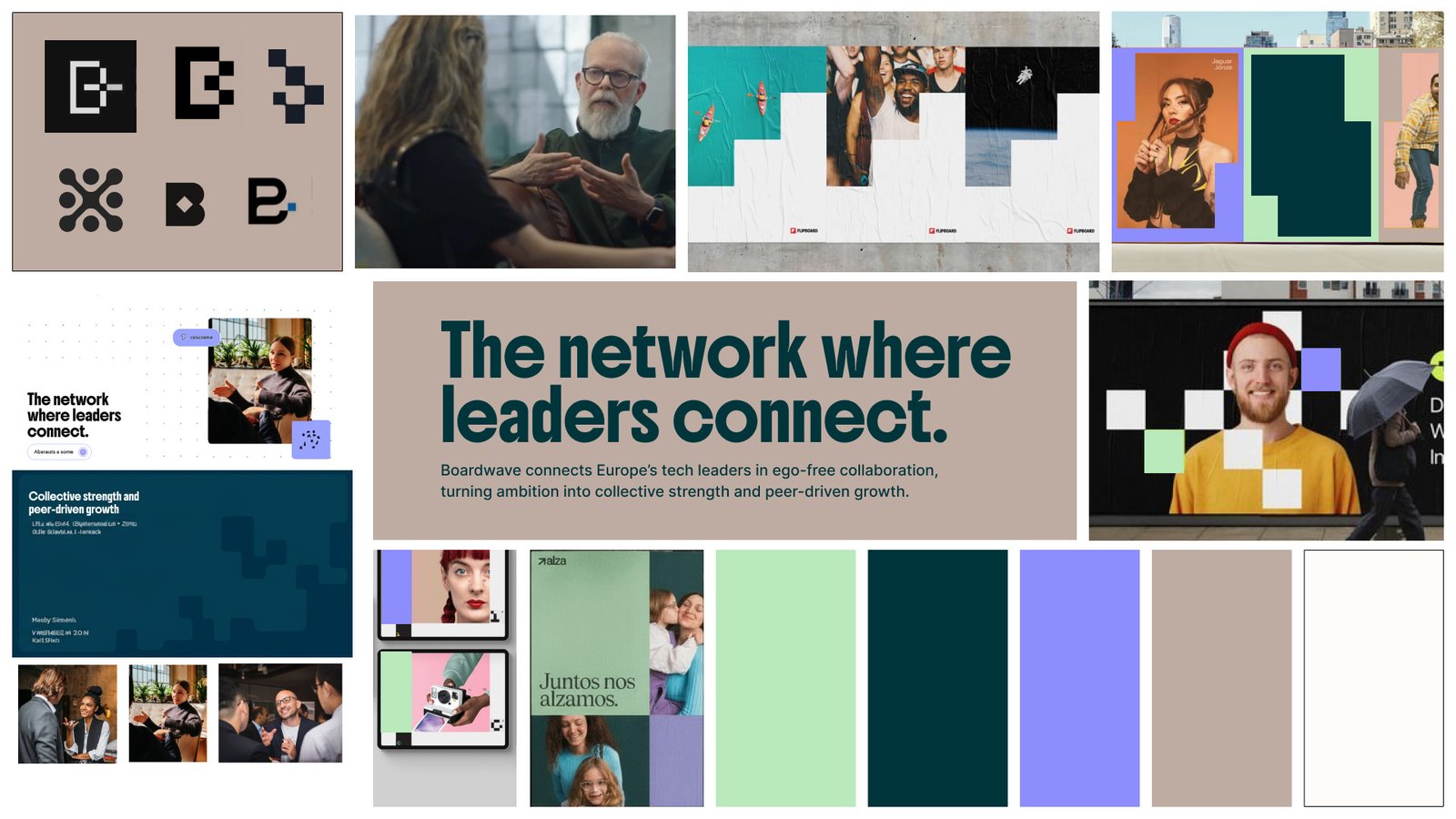
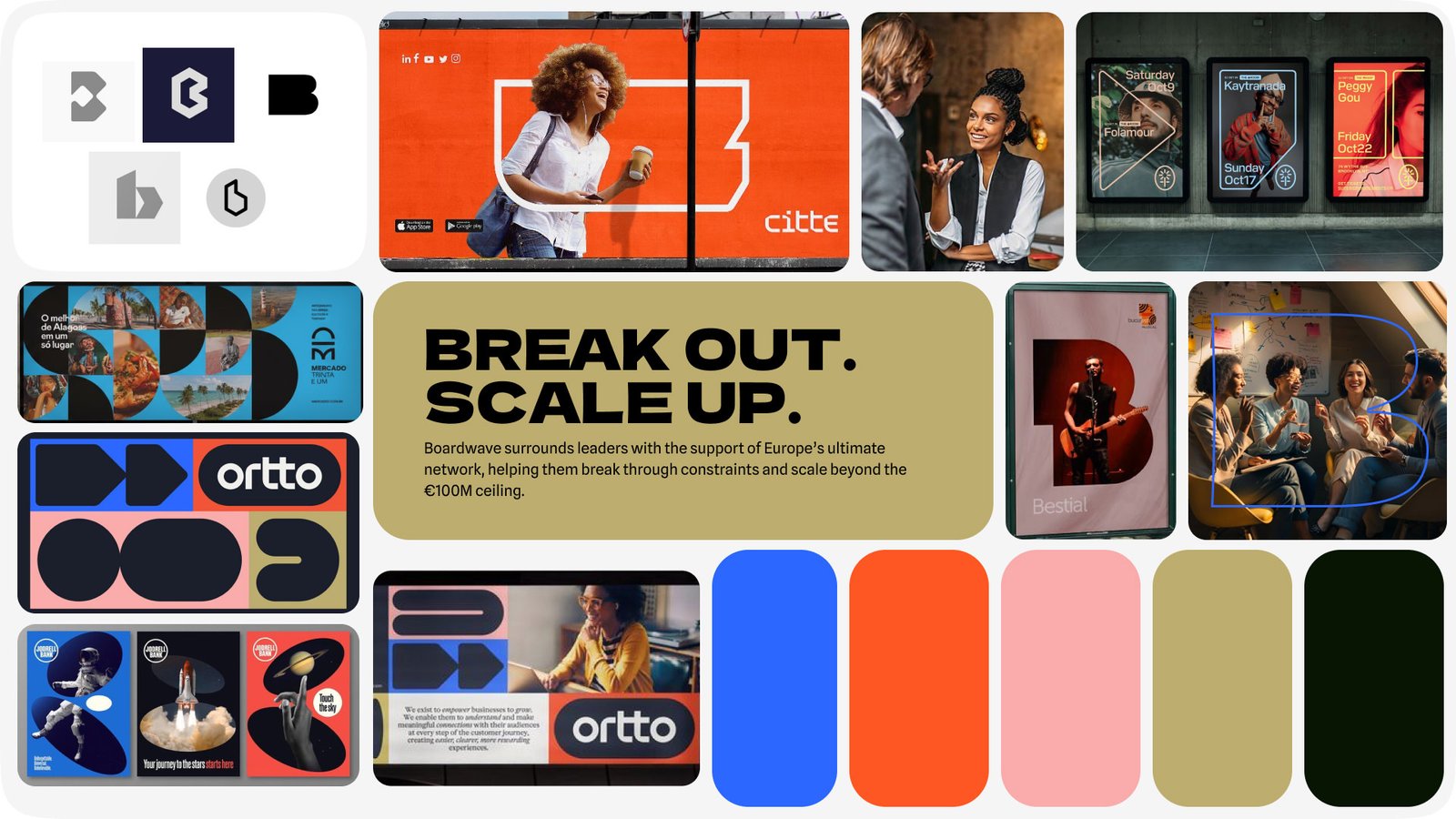
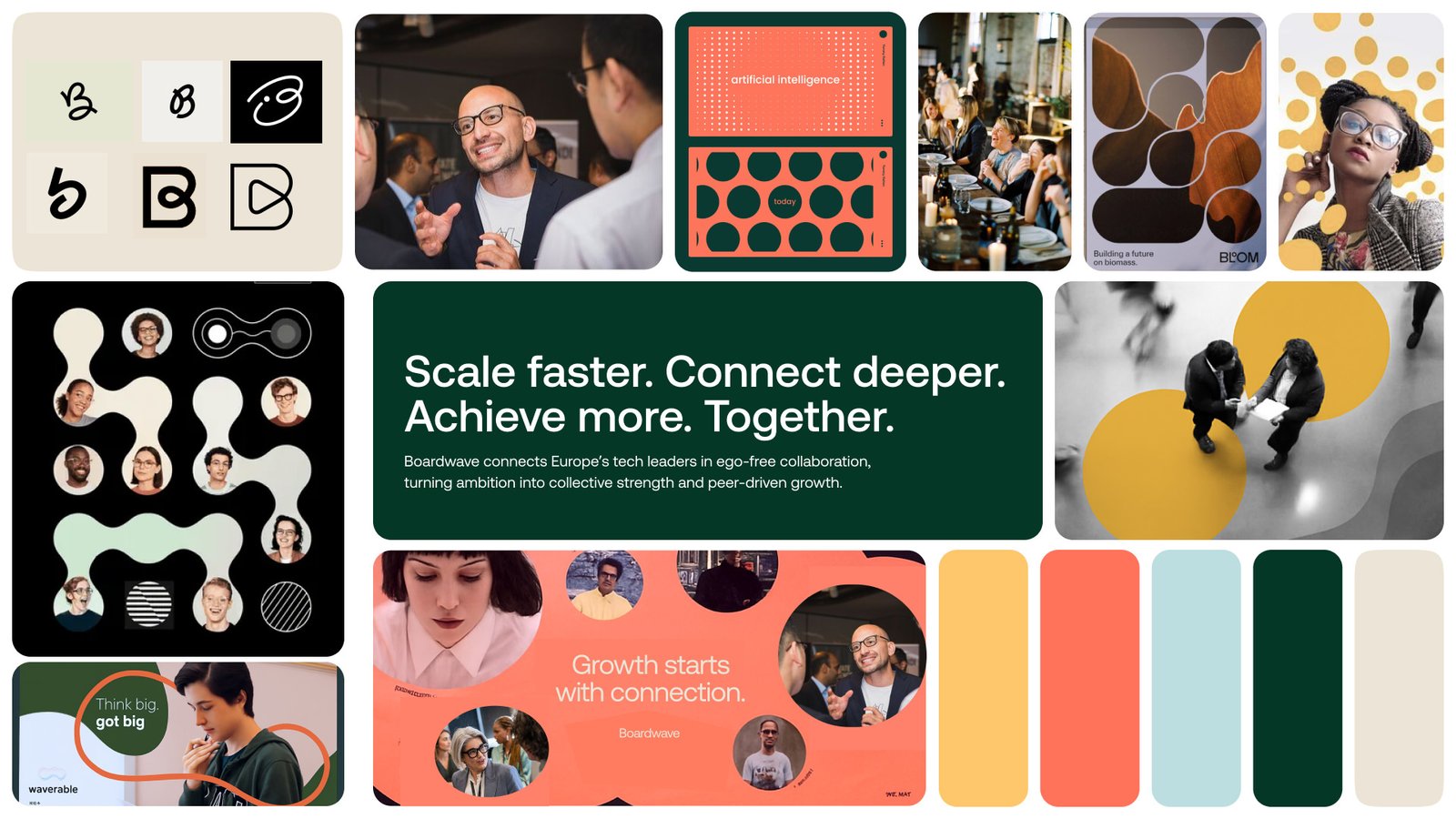
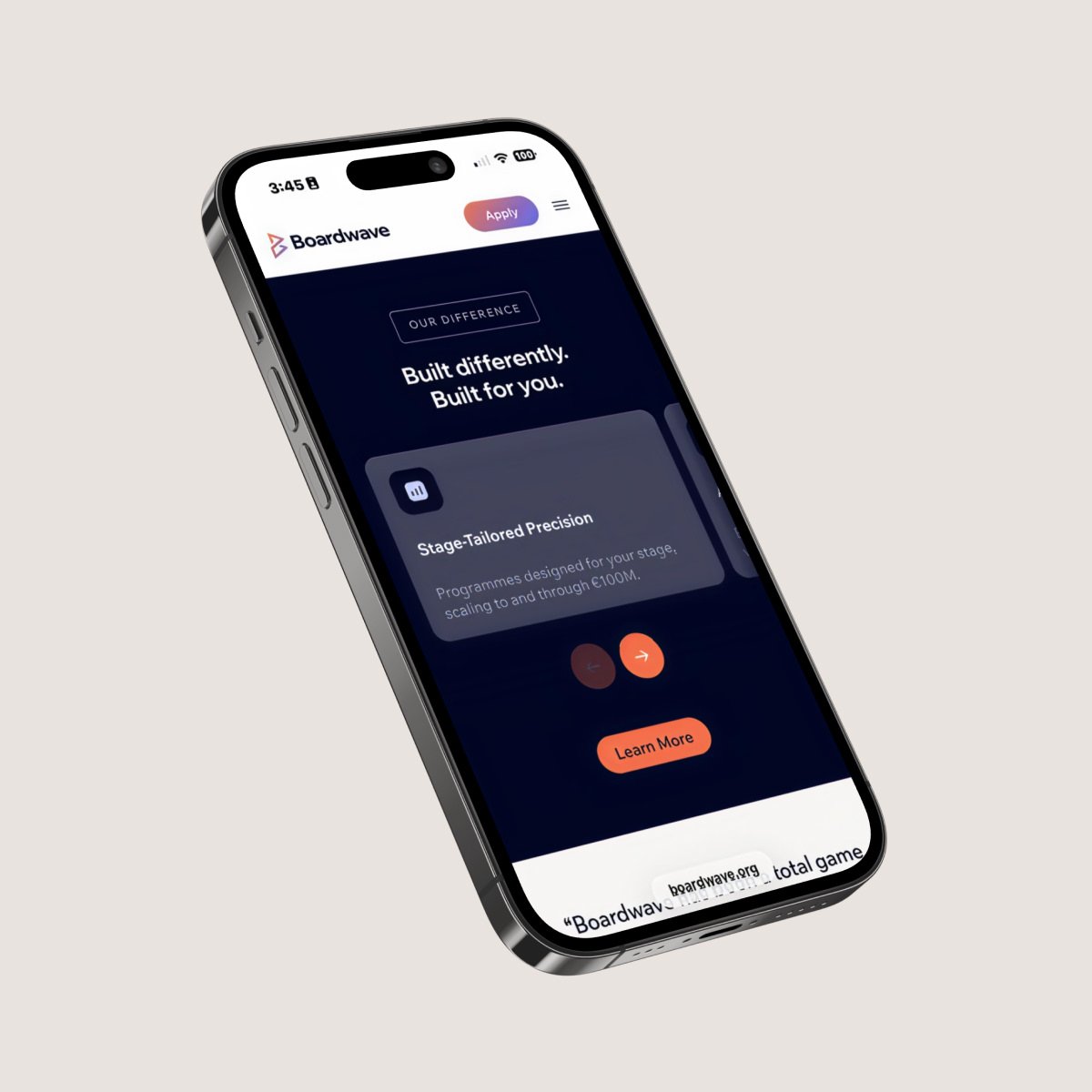
The BrandCore reframed Boardwave’s brand essence as “connect and accelerate Europe’s next tech giants,” supported by a positioning architecture that separated Boardwave from every competitor on two axes: stage-tailored precision and independence from commercial agenda. The competitive set (SaaStack, Founders Forum, Sifted, OPUS, ICE Network, and PE-led peer groups like Pep Talks) was mapped and the white space was clear: no one occupied the intersection of free, premium, independent, tech-only, and stage-matched.
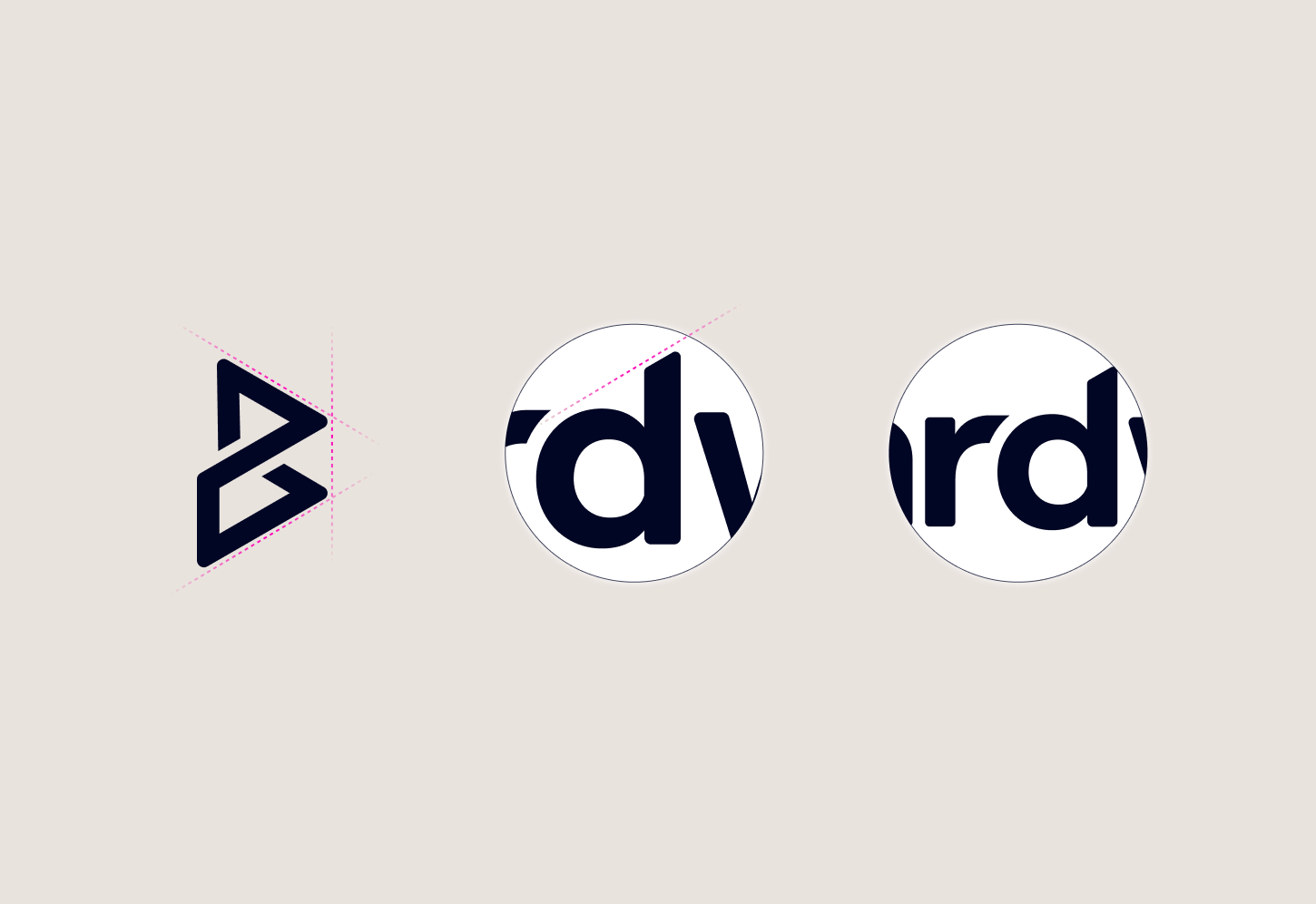
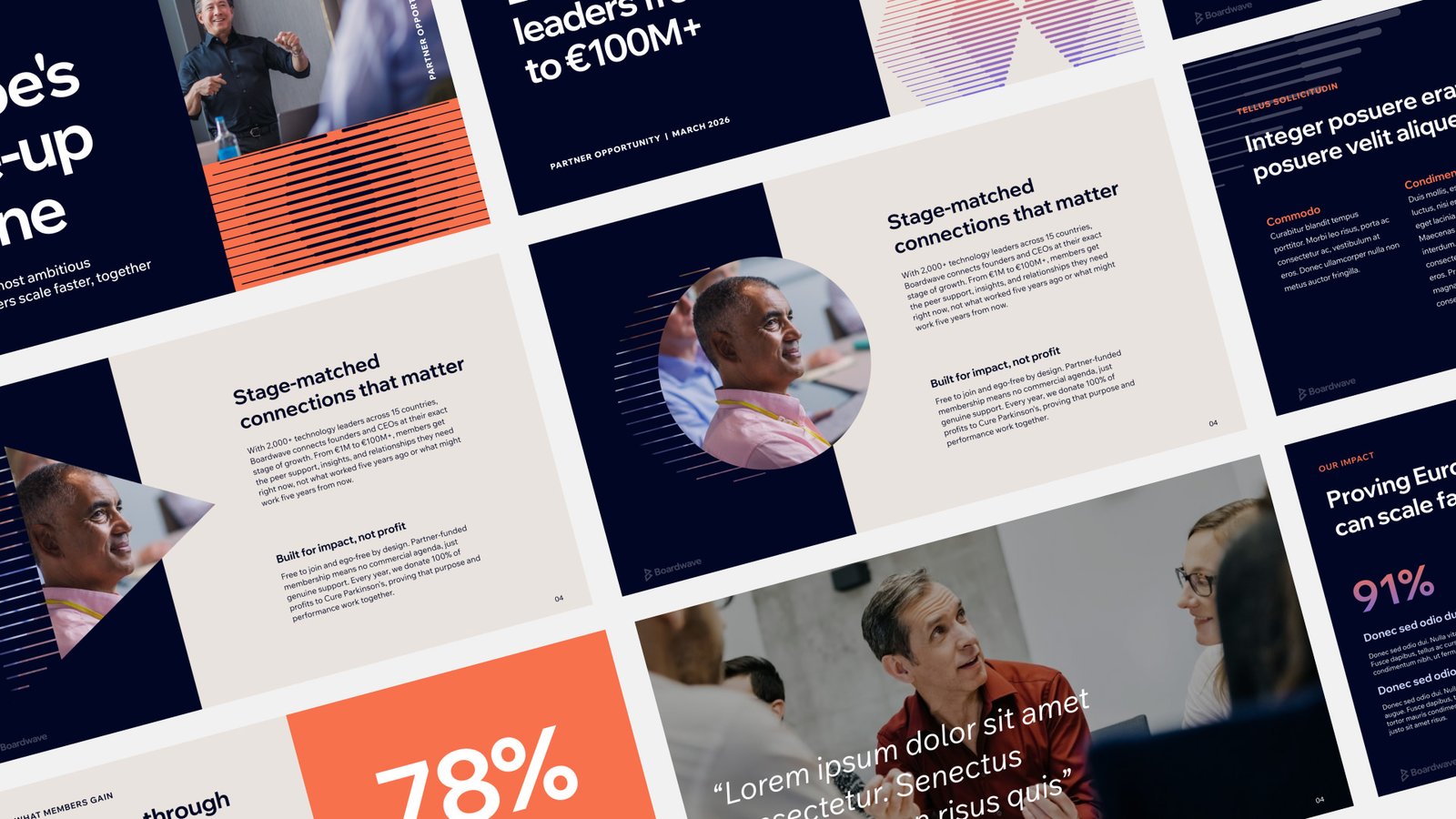
The visual identity was built through a collaborative expression process. Three rounds of exploration (universes, galaxies, planets) moved from high-level direction to refined execution.


“The way the visual identity developed was unlike any design process I’ve been part of. Starting really broad with the universes and then narrowing down through galaxies and planets meant we never felt rushed into a decision. At each stage we could see how the creative thinking connected back to the strategy. By the time we got to the final direction, it genuinely felt like ours, not something presented to us.”
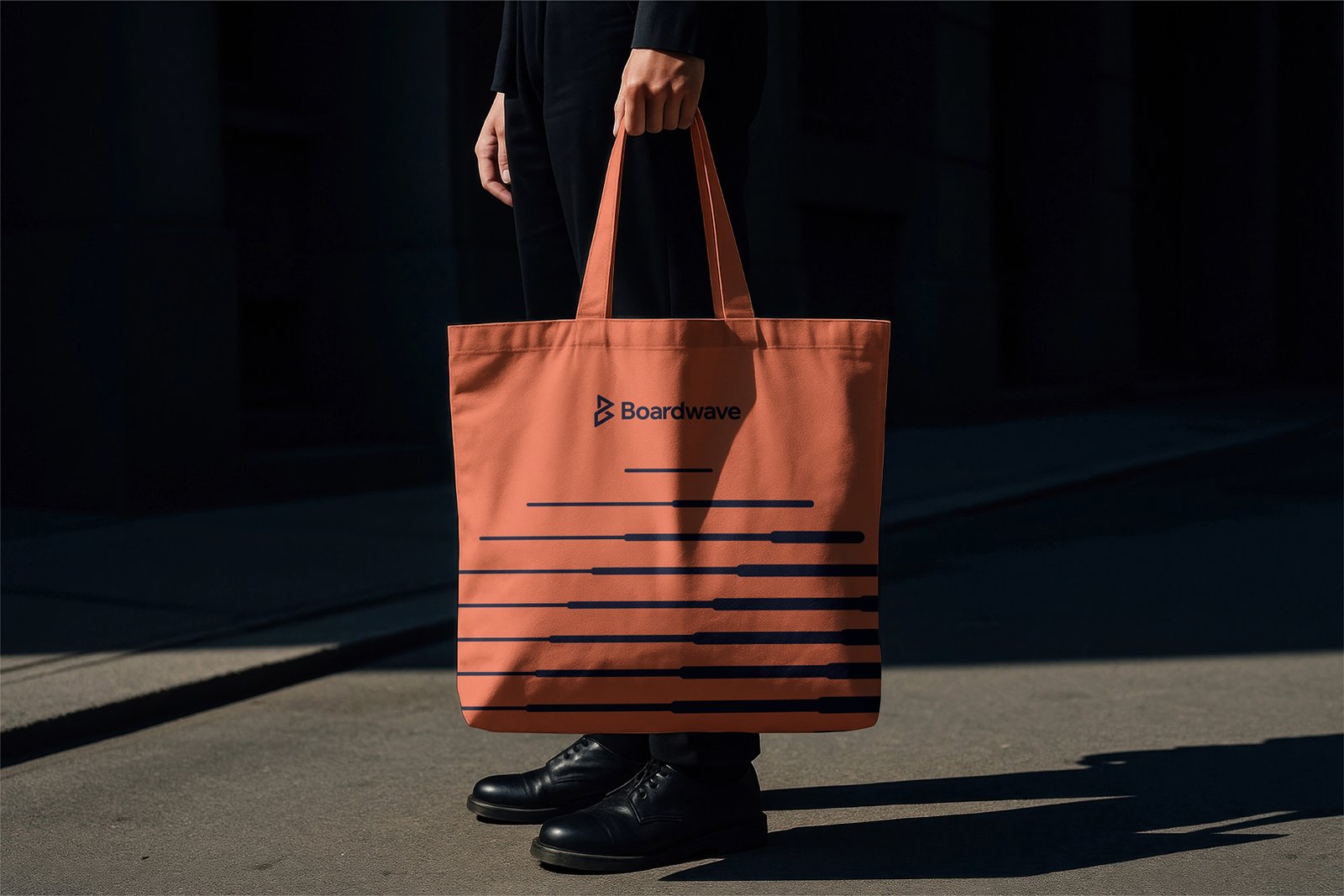
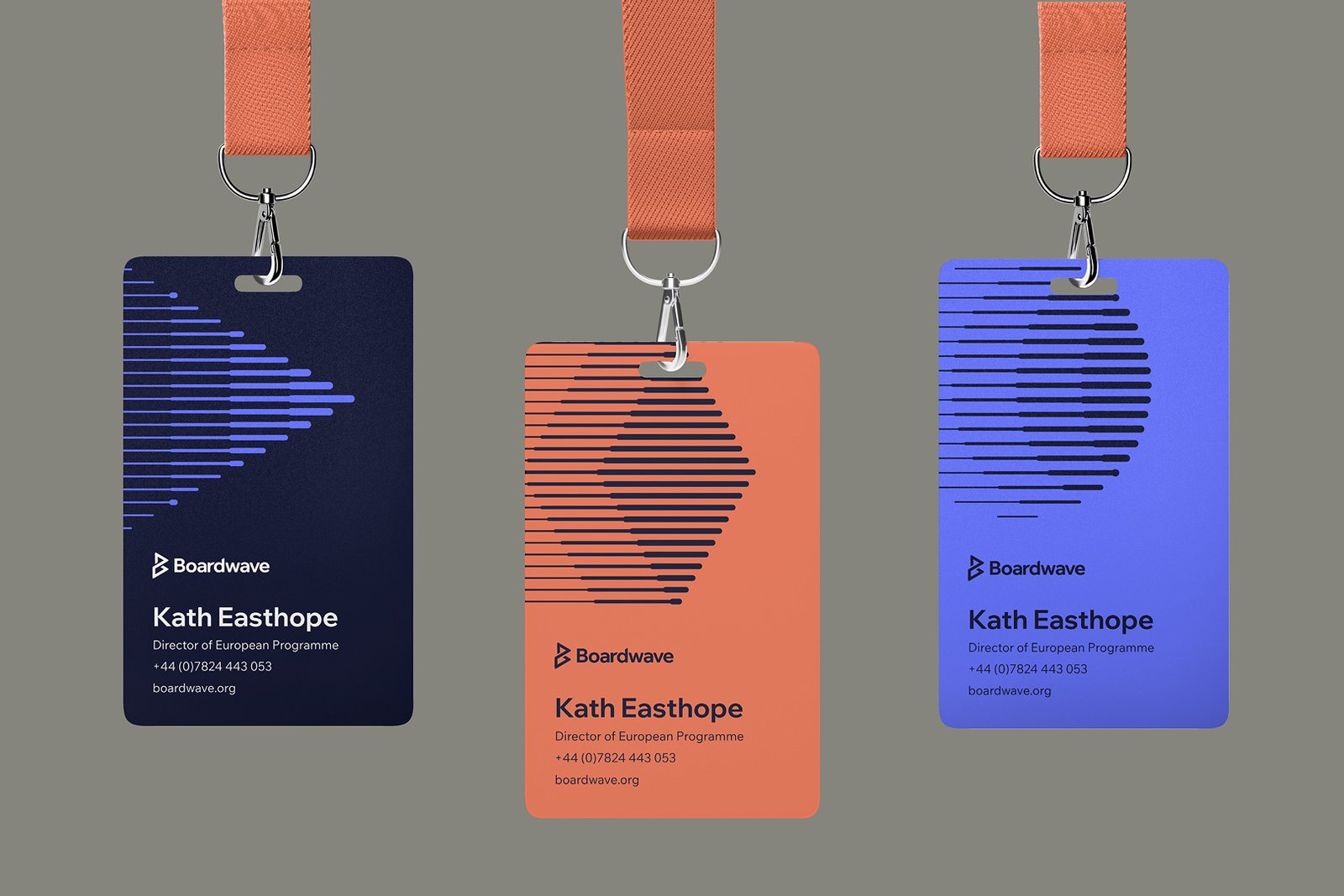
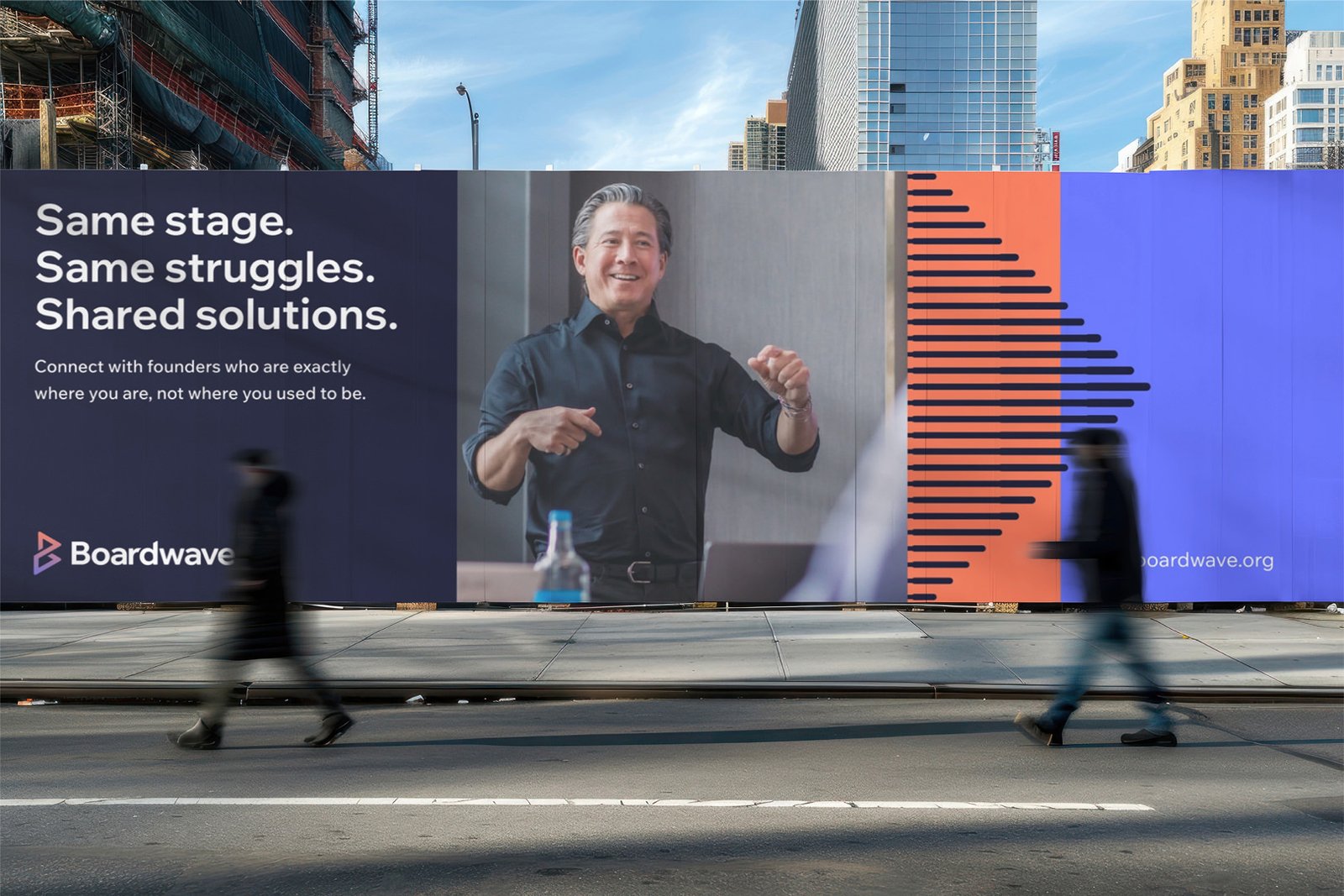
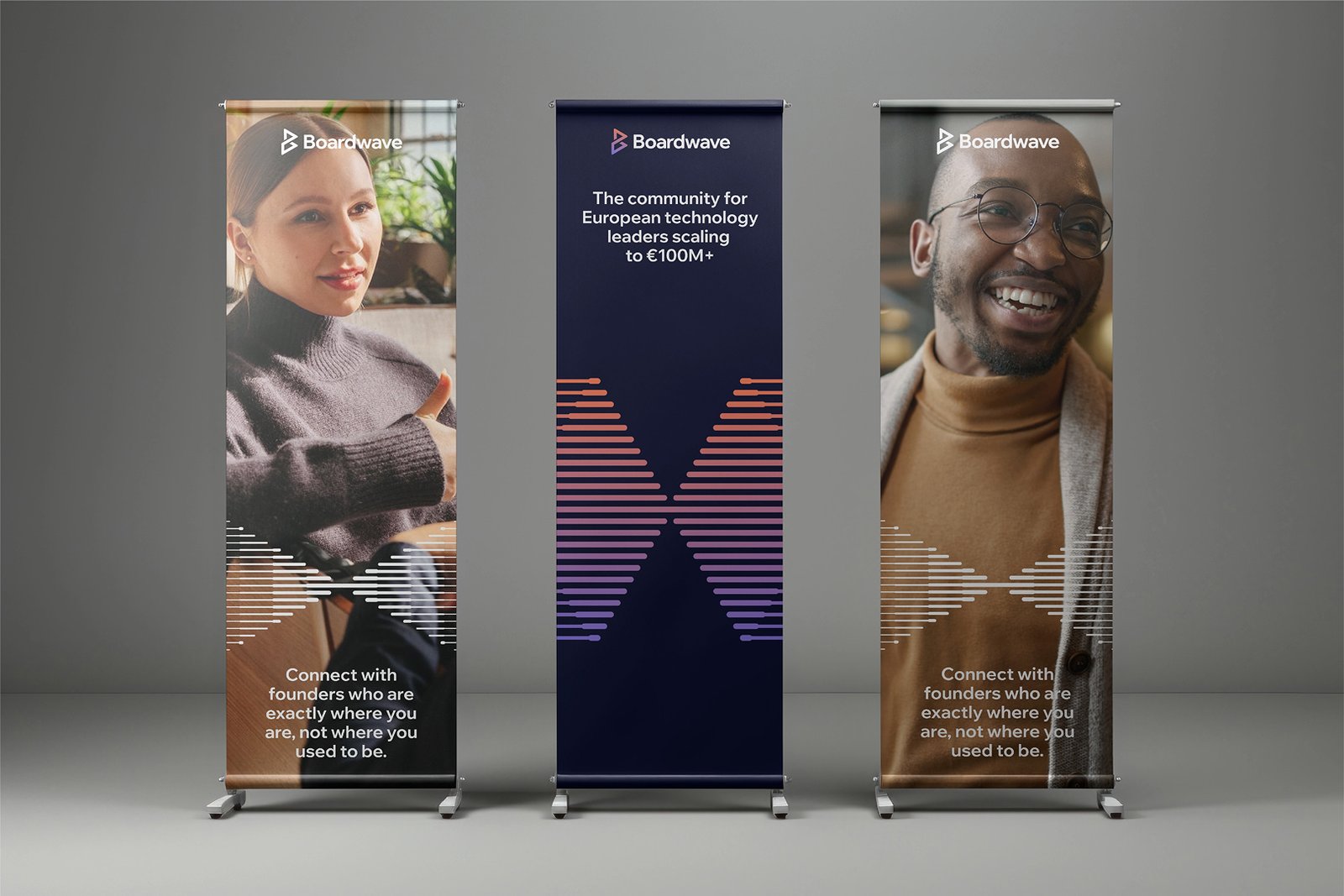
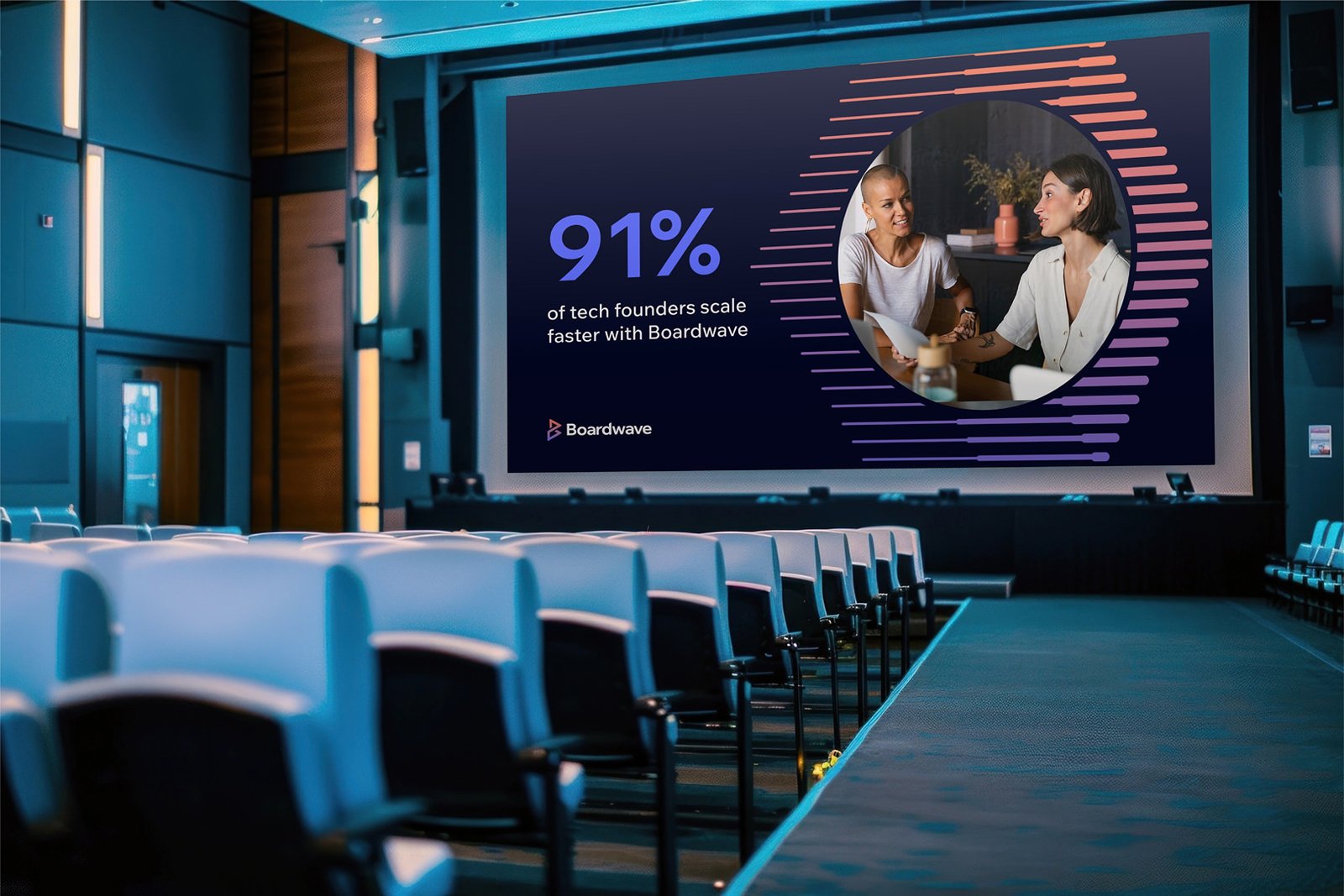
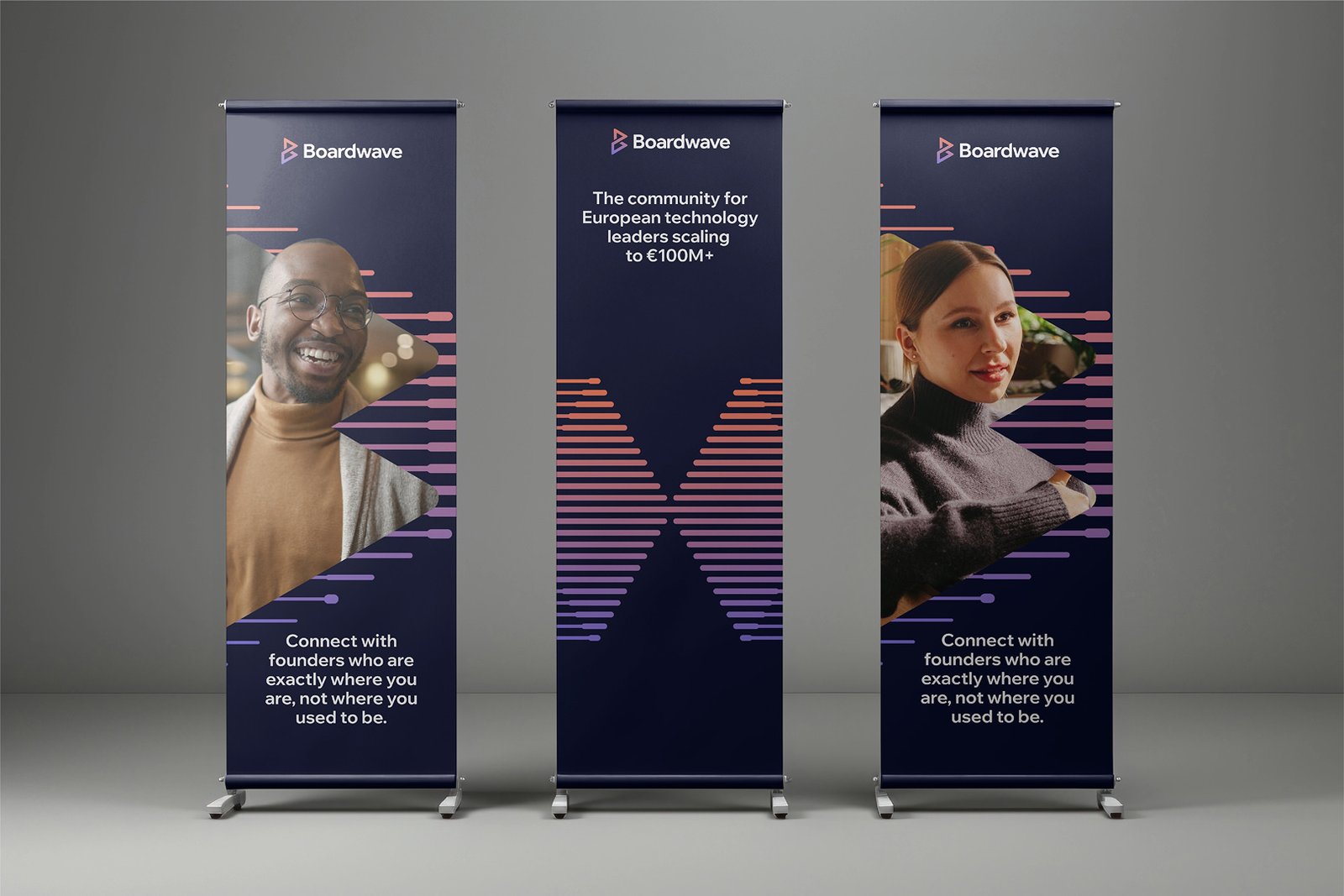
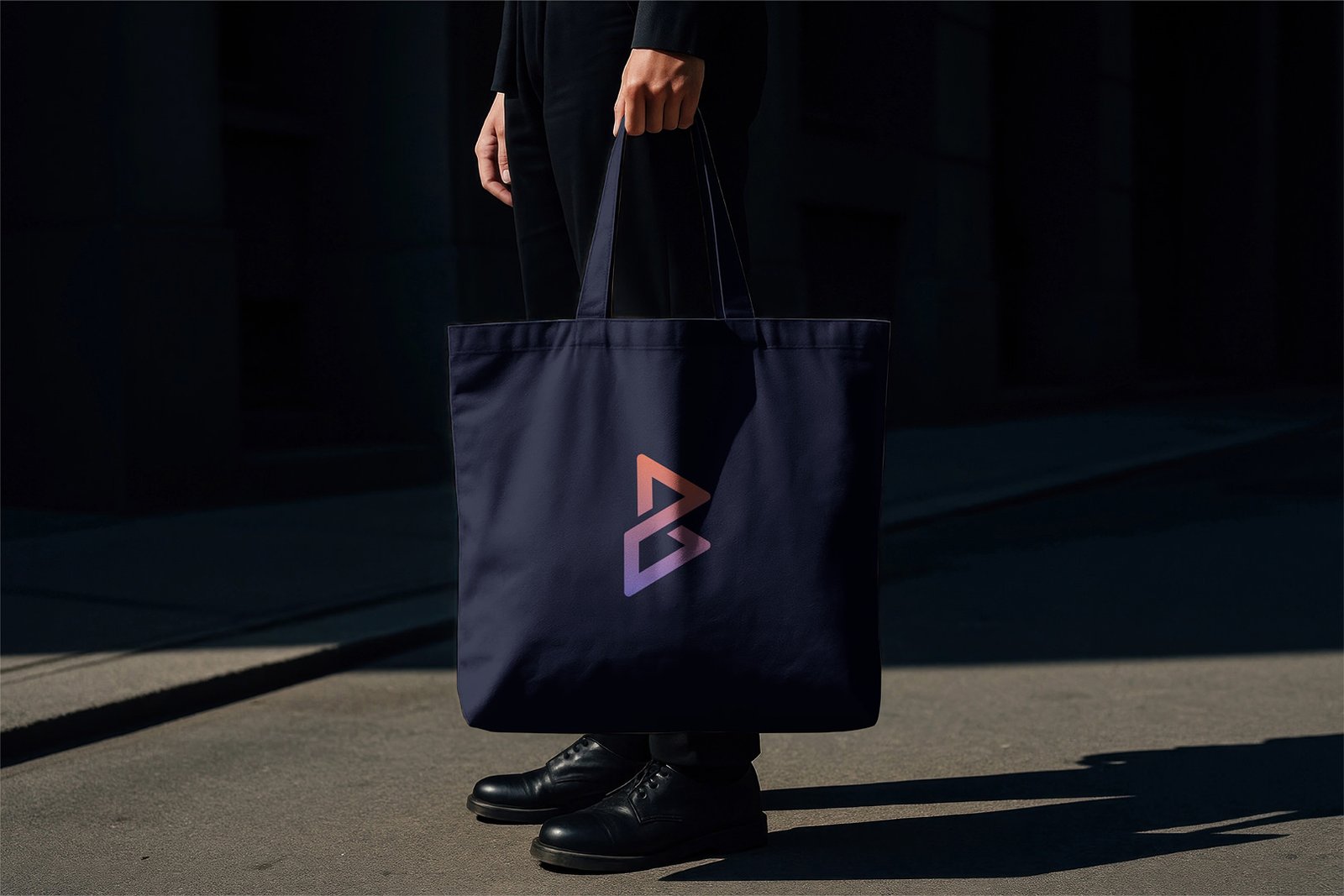
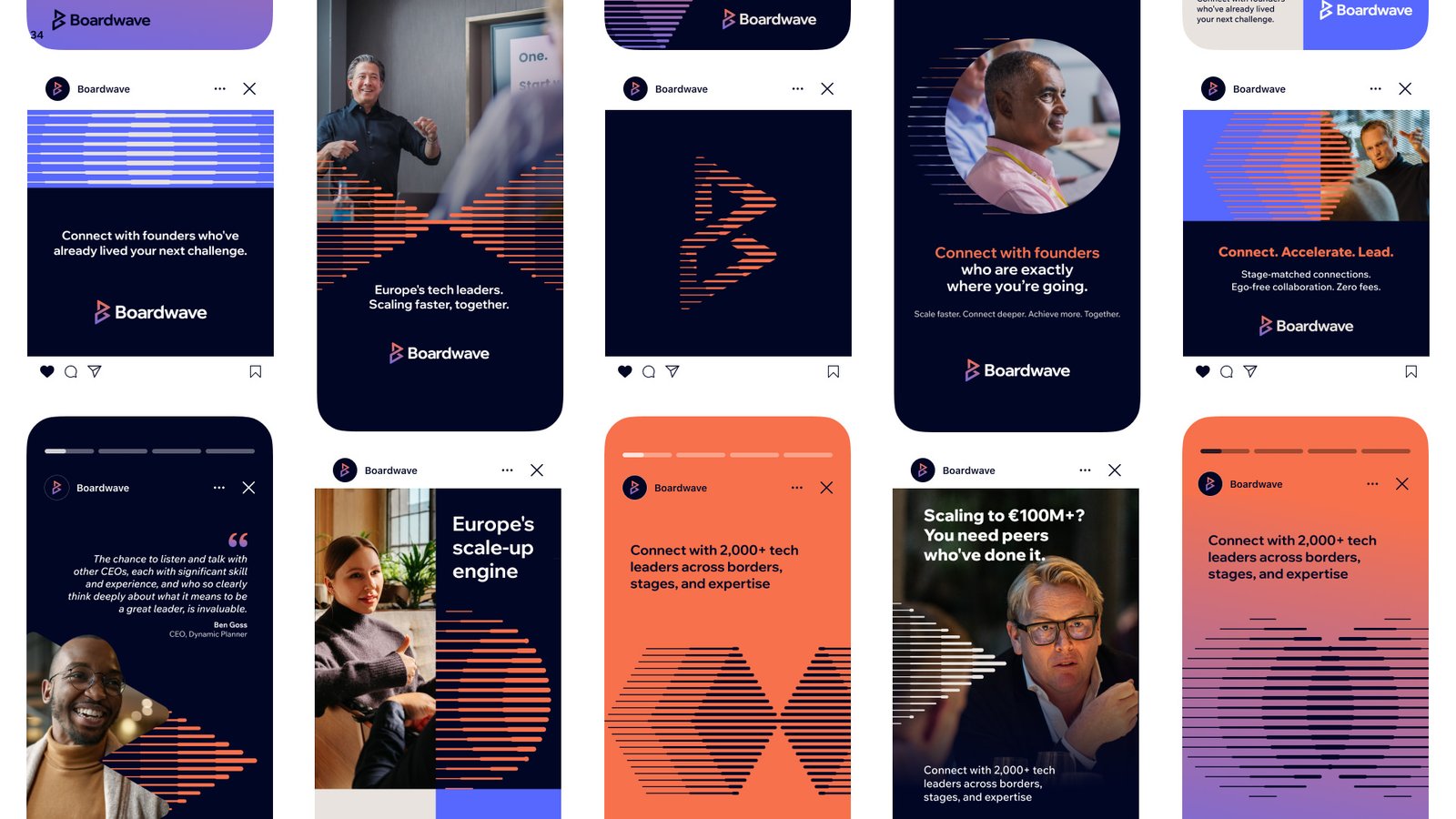
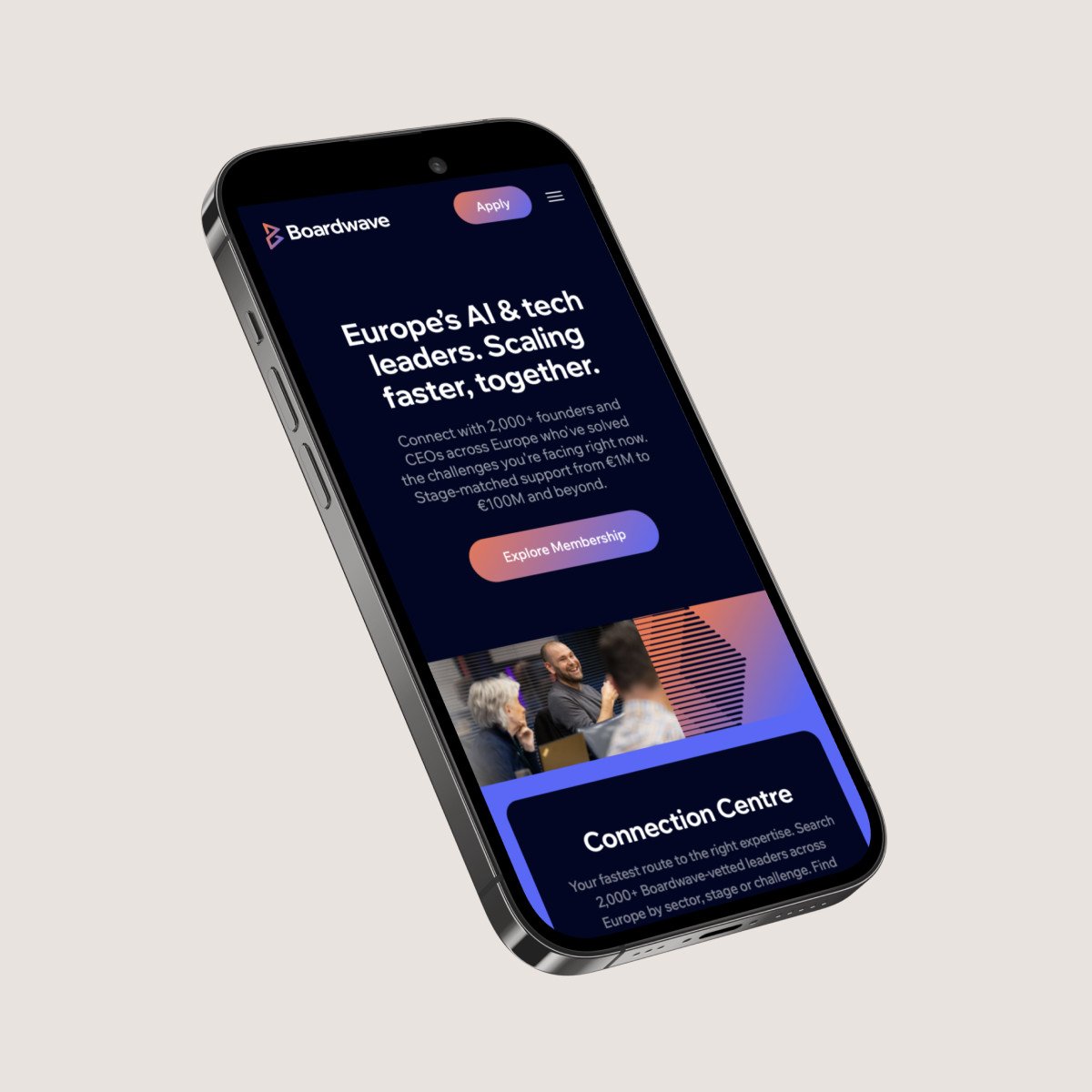
The logo, a pair of arrows forming a dimensional “B,” captured collaborative forward movement and the idea of Boardwave as a place, digital and physical, where leaders converge. A signature visual language of horizontal lines at varying speeds represented founders at different stages moving in the same direction. Logo animations, motion design guidelines, and visual language examples extended the identity into moving formats, giving the brand kinetic energy across digital touchpoints.
The colour palette paired deep navy with a warm coral, deliberately steering away from the cold blues and greys that dominate European tech community branding. The team consistently pushed back on anything that felt corporate, academic, or “blokey,” in Kath’s word. They wanted the brand to feel ambitious and human, not like another network trading on the status of its members.
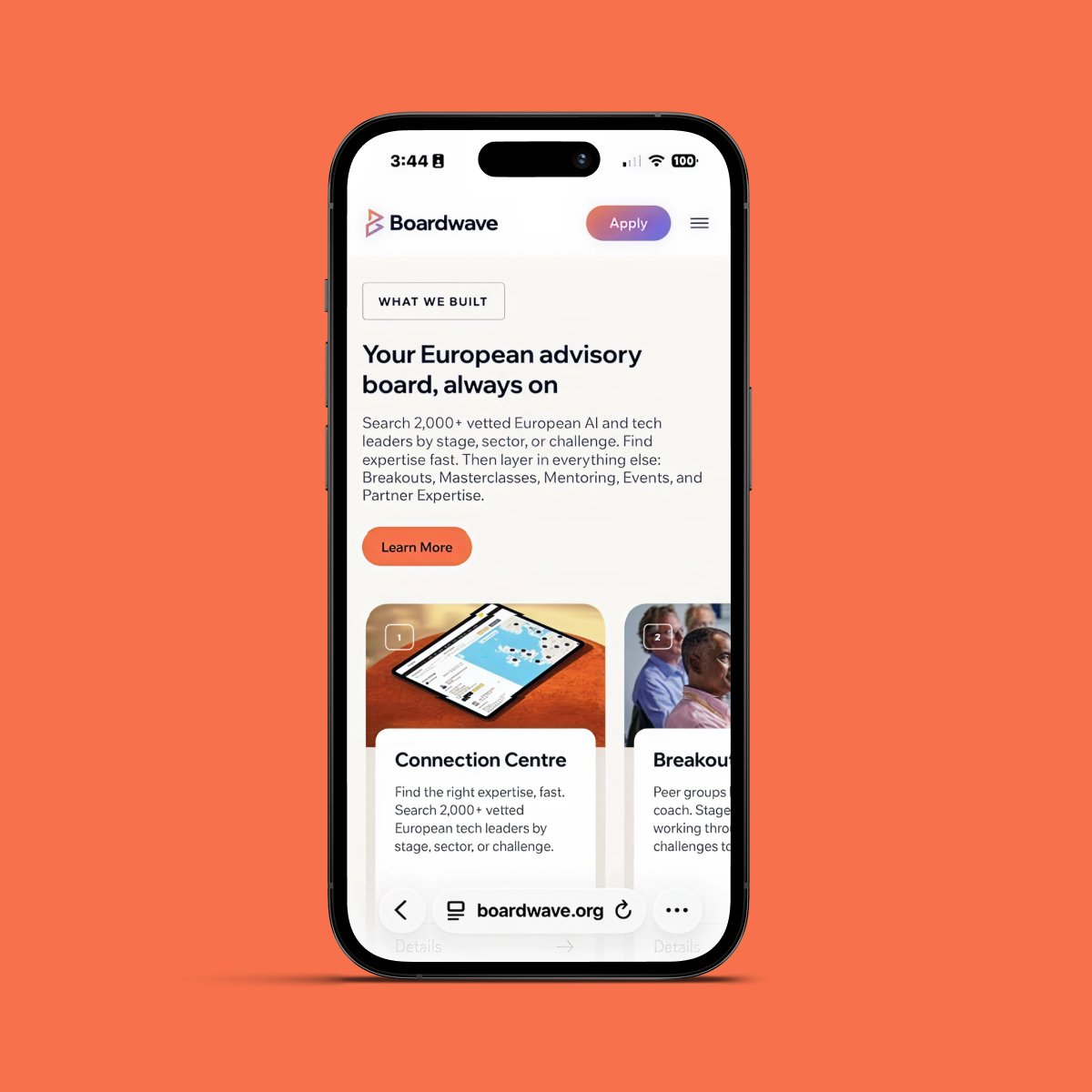
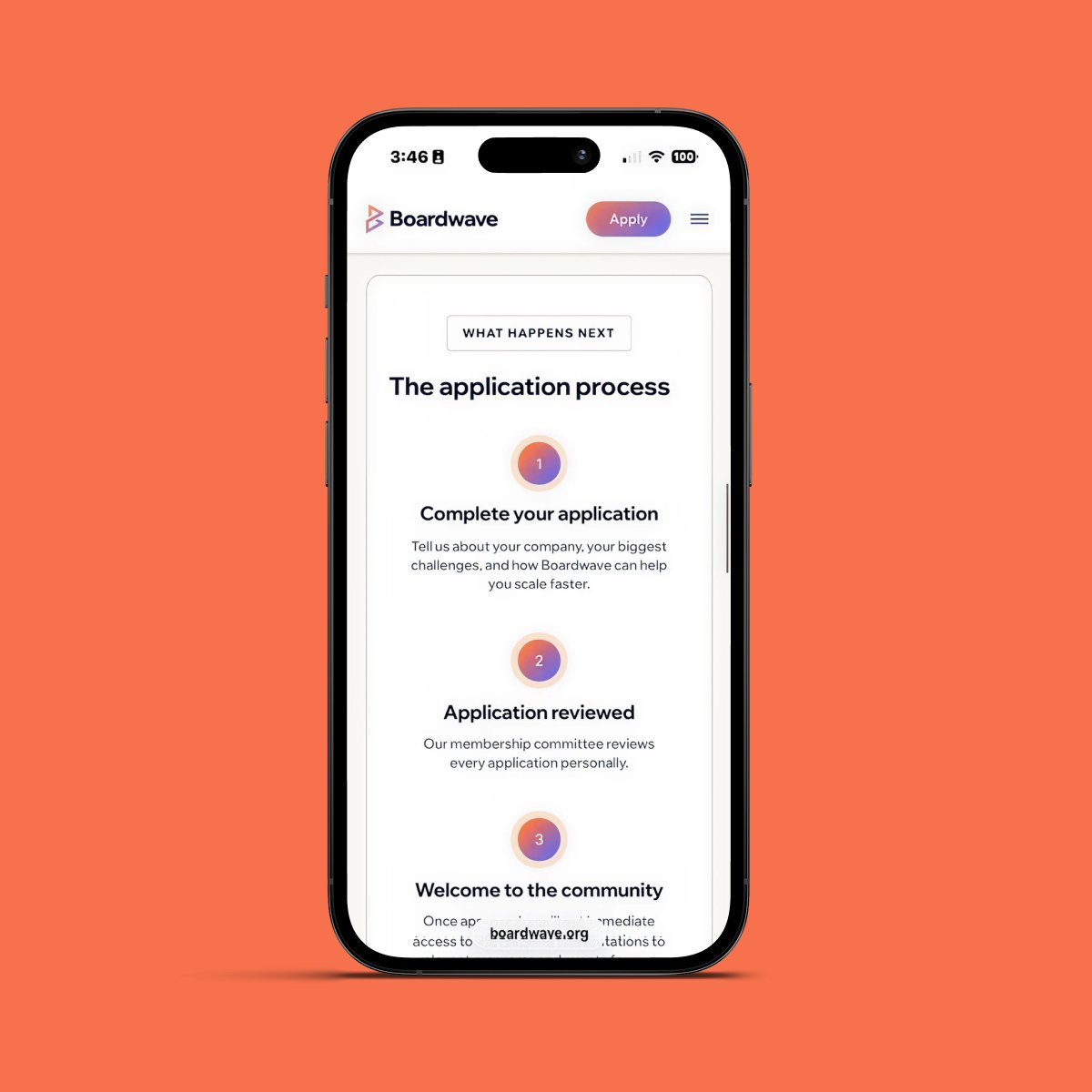
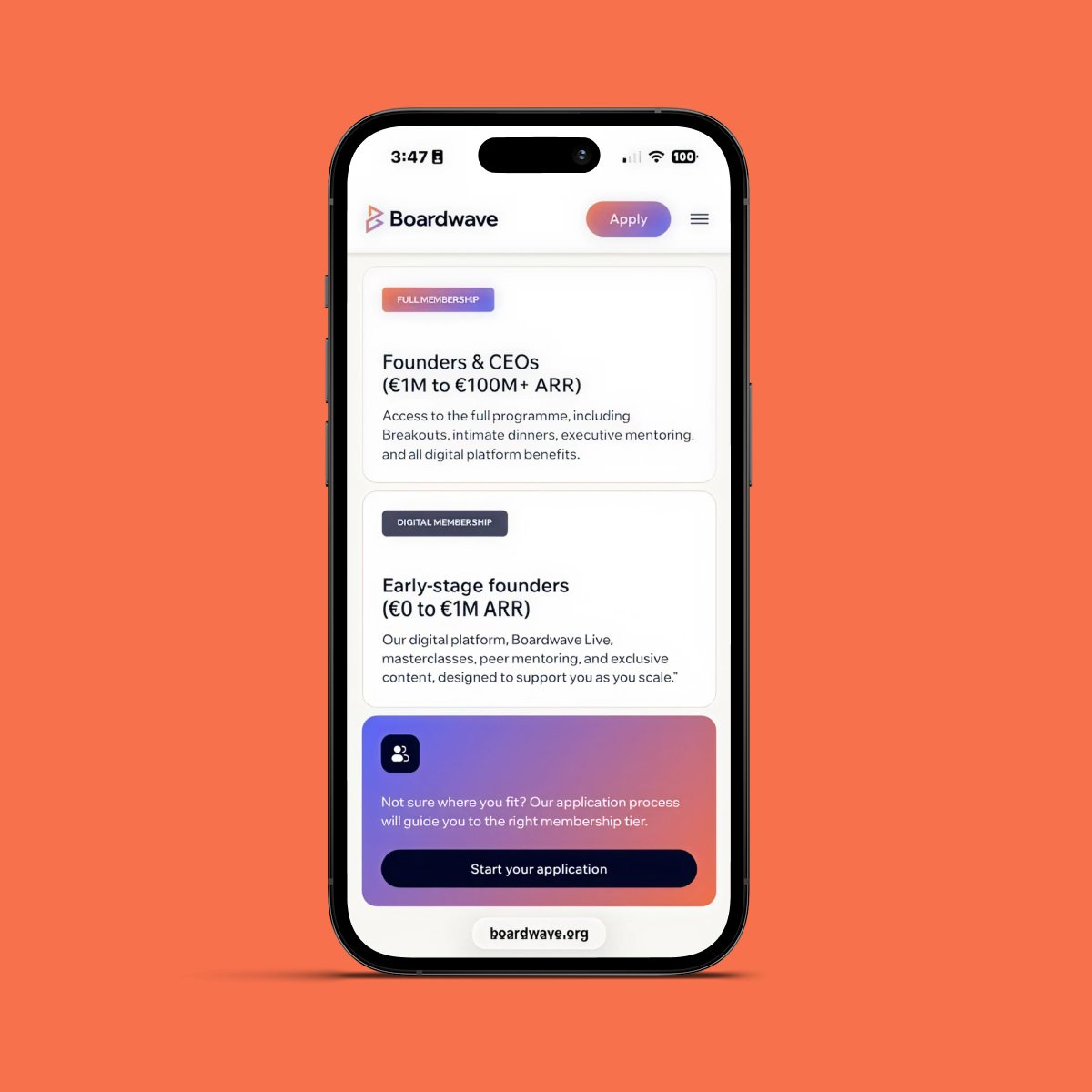
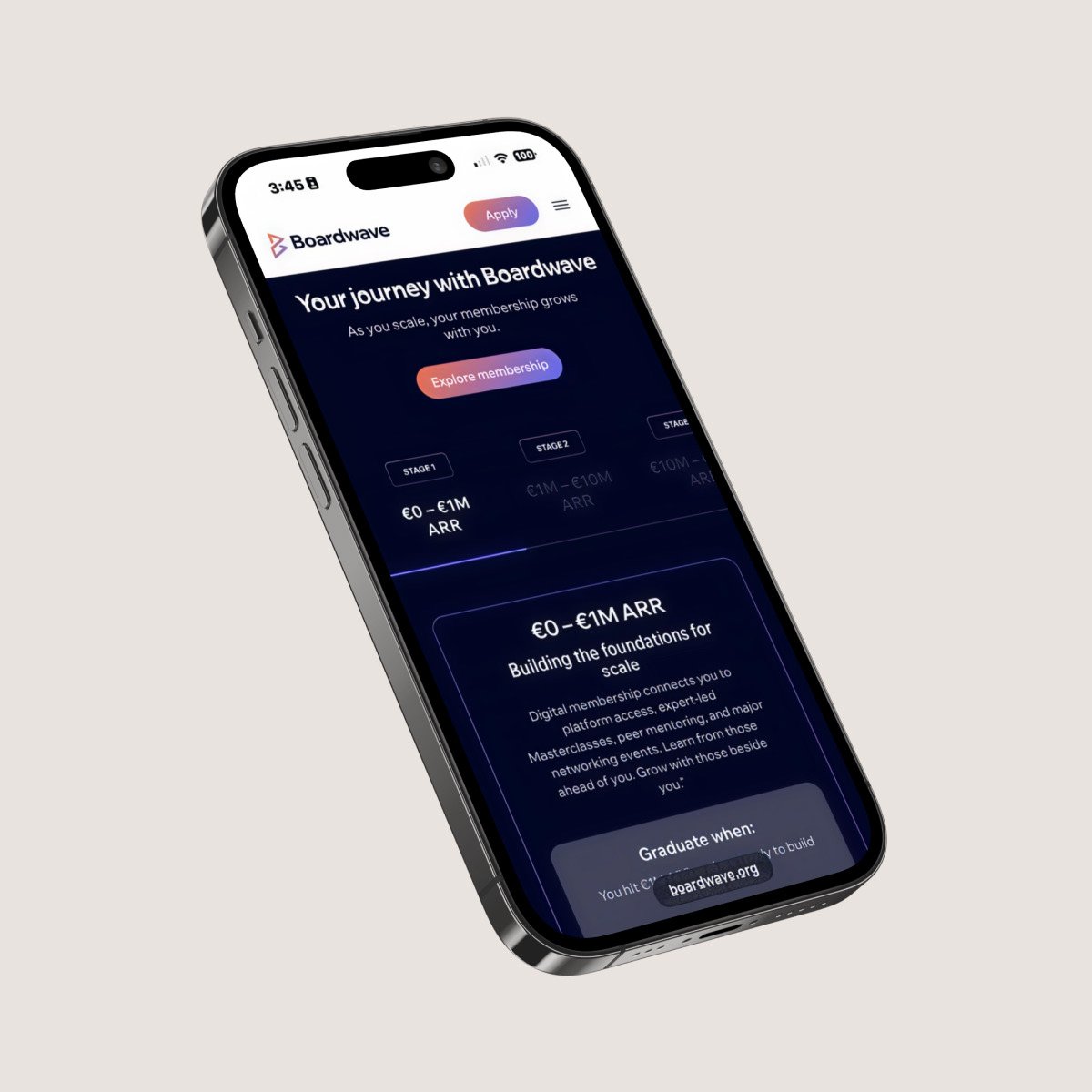
The execution phase delivered UX/UI design, full website copywriting, and a Webflow build, bringing the BrandCore and visual identity to life as a functioning site.
What was deliberately left out: process language, methodology narration, and any claim the brand could not yet prove. Kath was candid throughout about the absence of hard scaling metrics. The messaging was built to be honest about aspiration while staying grounded in what Boardwave could verify: the size and quality of its community, the calibre of its partners, and the £300k donated to Cure Parkinson’s.
The brand finally matches the ambition we’ve always had for this community. That doesn’t happen by accident.

Amy Wilson Wyles
Director of marketing
The brand guidelines and BrandCore received immediate sign-off from Phill Robinson, Boardwave’s co-founder and chairman. “I read through the full brand guidelines expecting to have a list of things to push back on. I didn’t. It captured what Boardwave is trying to do in a way that felt genuinely right. The brand finally matches the ambition we’ve always had for this community. That doesn’t happen by accident. It happens because someone takes the time to properly understand what you’re about before they start designing.”
The team began using the messaging playbook before the official rollout. Kath described the urgency directly: “We don’t want to wait anymore to be using that stuff. We’ve seen the grass. It’s greener.” She had already sent new Boardwave positioning copy to the London Stock Exchange for a partner communication.
“The most valuable aspect of working with Tokyo Calm was the combination of exceptional project management and the way Seth set us up for success with clear rules and structure to keep the process focused. The quality of the output has been fantastic. What really stood out was the genuine collaboration throughout. It always felt easy to share opinions and feedback, and Seth captured or challenged them thoughtfully and brilliantly. As a result, we landed on a brilliant new brand and messaging playbook in a relatively short time.”
The wider Boardwave community responded. Amber, a community member who had seen the work in progress, told Kath to recommend the process, but only to members who deserved it.
The website is live. The engagement continues. “The fact that the engagement didn’t just end with a brand guidelines PDF has made a real difference. Having ongoing support through the website build and beyond means the brand is being applied properly, not just handed over and left to fend for itself. We’re still working with Tokyo Calm, and the consistency between what was promised in the strategy and what’s actually been delivered is exactly what we needed.”
The brand is now the operating system for how Boardwave presents itself to founders scaling to and through €100m+, partners, and the wider European AI and tech ecosystem.
I’ve been through many branding processes over the years, and this one truly stood out for its clarity, speed, creativity and quality. All-round brilliance.

Kath Easthope
CEO, Boardwave


Most communities fail at brand because they describe the container instead of the contents. They say “we bring people together” when what matters is what those people do differently after being together. The shift for any community-stage organisation is to stop positioning around access and start positioning around acceleration. The question is not “who is in the room” but “what happens because the room exists.”
Other Work
(Case Studies)

Every great brand starts with a conversation.
Navigation
Legal




Copyright © Tokyo Calm 2026